In the face of climate change and the decline in biodiversity, the way we look after our outdoor spaces is changing. At Kerbeleg, we have chosen to adopt a differentiated management approach in certain areas. This approach finds a poetic yet rigorously ecological expression within our plot, where around twenty fruit trees grow (peach, cherry, apple and pear trees, fig trees, nectarine trees and plum trees). A look back at the foundations of a beneficial practice: sustainable mowing.
An ecosystem undergoing controlled, natural evolution
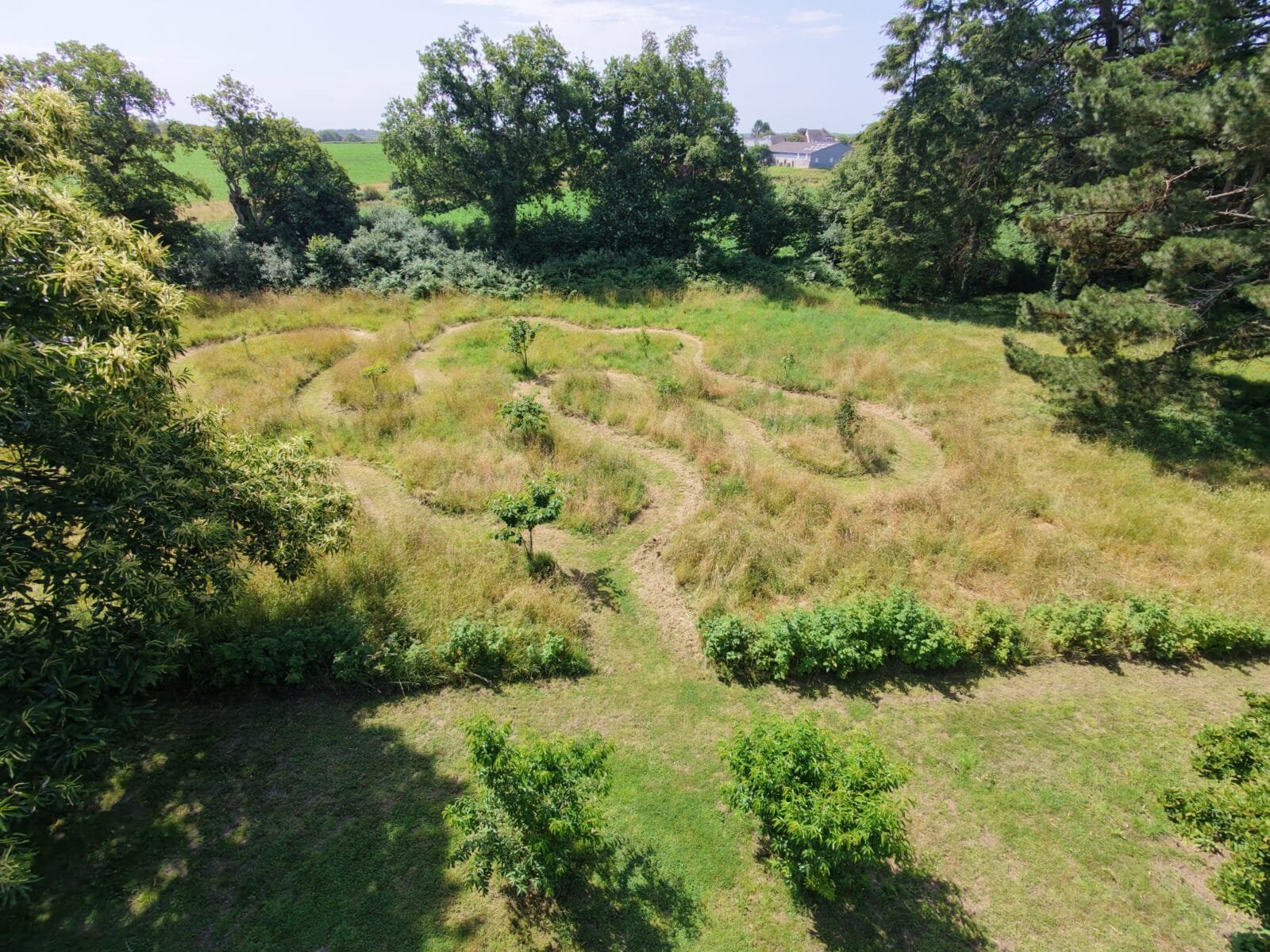
Where traditional maintenance would require a short, uniform and often barren lawn, we have chosen to maintain a tall meadow. As spring draws to a close, this mature herbaceous layer plays a crucial role as a thermal shield and as the host for an essential ecosystem. By generously covering the ground, it limits direct water evaporation, maintains essential underground moisture and protects the root systems of our young saplings.
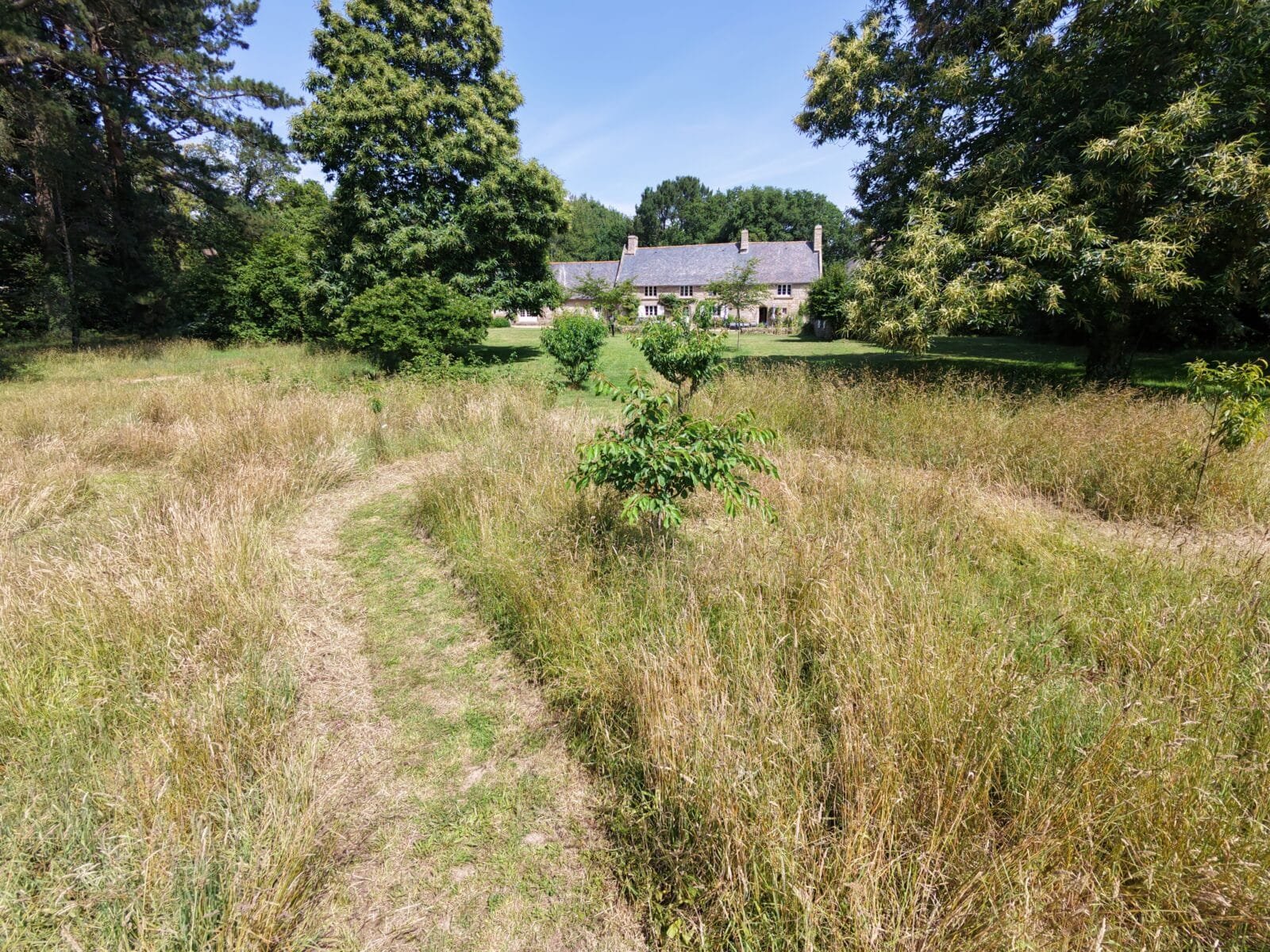
Each fruit tree benefits from a carefully cleared area at its base to prevent direct competition from wild grasses, whilst still benefiting from the immediate proximity of this diverse flora. The tall grasses act as a veritable nursery, sheltering beneficial insects, pollinators and a whole range of microfauna essential to the orchard’s good health and future fruit production.
The geometry of curves: aesthetics and functionality
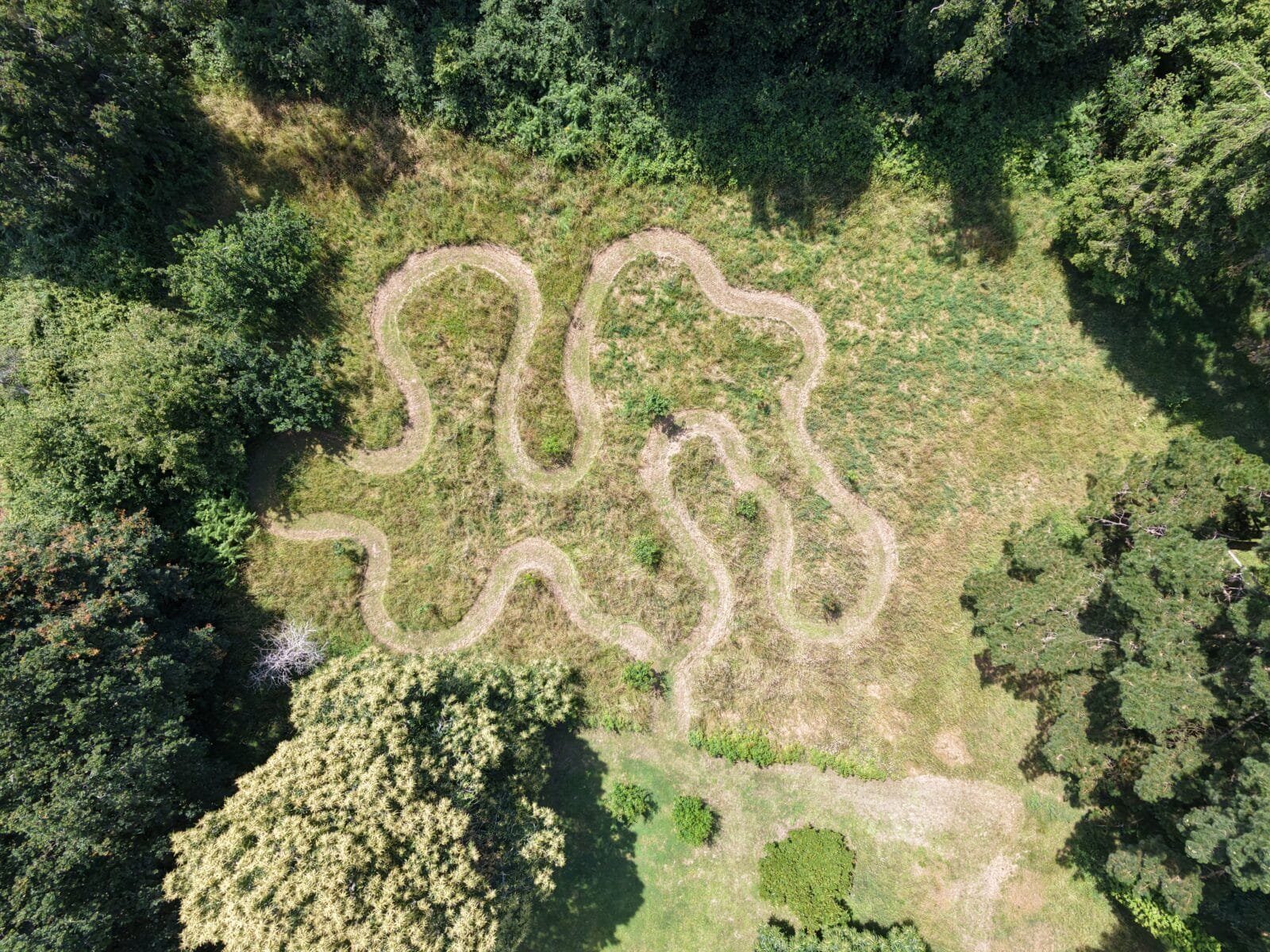
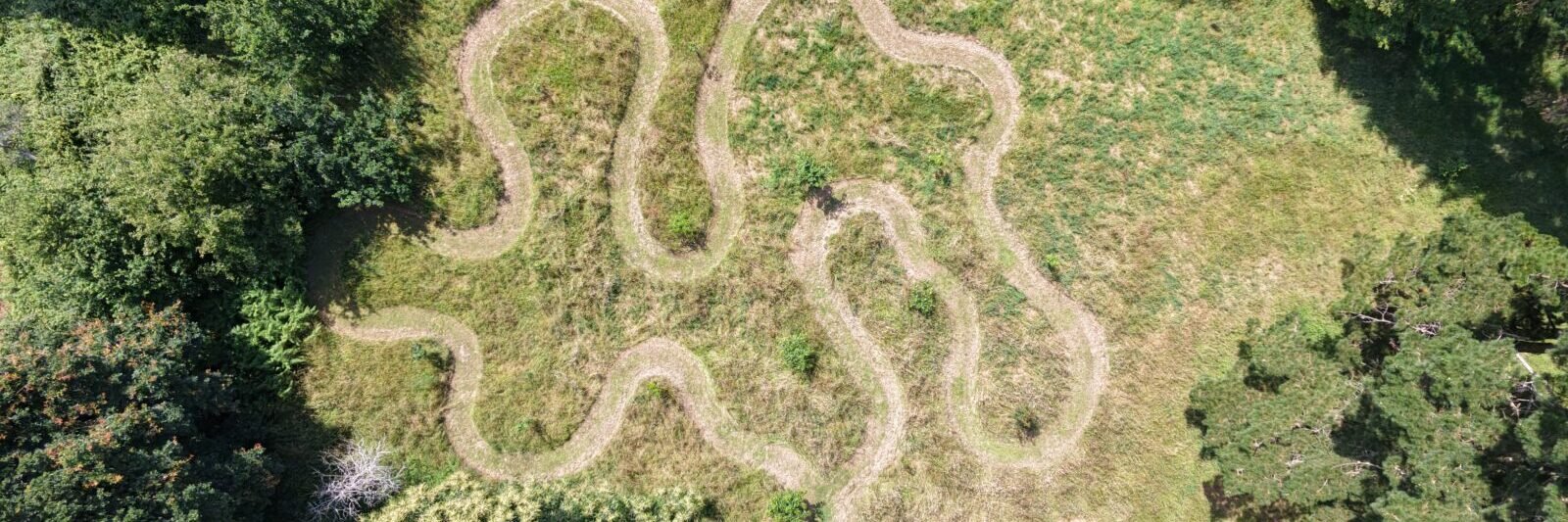
To structure this dynamic space, we have laid out a single, looping path in sinuous curves that winds its way through the meadow. This path is not merely an aesthetic whim; it fulfils a dual purpose:
- An invitation to wander: This path transforms a potentially derelict area into a deliberate place for strolling. It encourages visitors to slow down and observe the living world in detail, whilst offering a striking visual contrast between the soft green of the mown grass and the golden hues of the tall wild grasses.
- The creation of refuge zones (the edge effect): In ecology, the transition zones between two distinct biological habitats are the richest in biodiversity. The meandering layout extends the length of this invisible boundary. Beneficial predatory insects (such as ground beetles or hoverfly larvae) find ideal hunting grounds and refuges here, in the immediate vicinity of the trees to be protected.
Towards the sustainability of natural cycles
This approach fits seamlessly into the wider landscape of Kerbeleg, surrounded by our ancient oaks and flowering chestnut trees. Here, sustainable mowing demonstrates that it is not a neglect of maintenance, but a carefully considered management practice.
By reducing the frequency of mowing to what is strictly necessary, we limit soil compaction and preserve its structure. The tall grassland naturally enriches the soil with organic matter with each cycle, creating a resilient and self-sustaining ecosystem. This method harmoniously reconciles the orchard’s productive purpose, respect for the biological rhythms of the local wildlife (nesting, butterfly cycles) and an atmosphere of tranquillity for all who wander through the estate.