
Origins and location
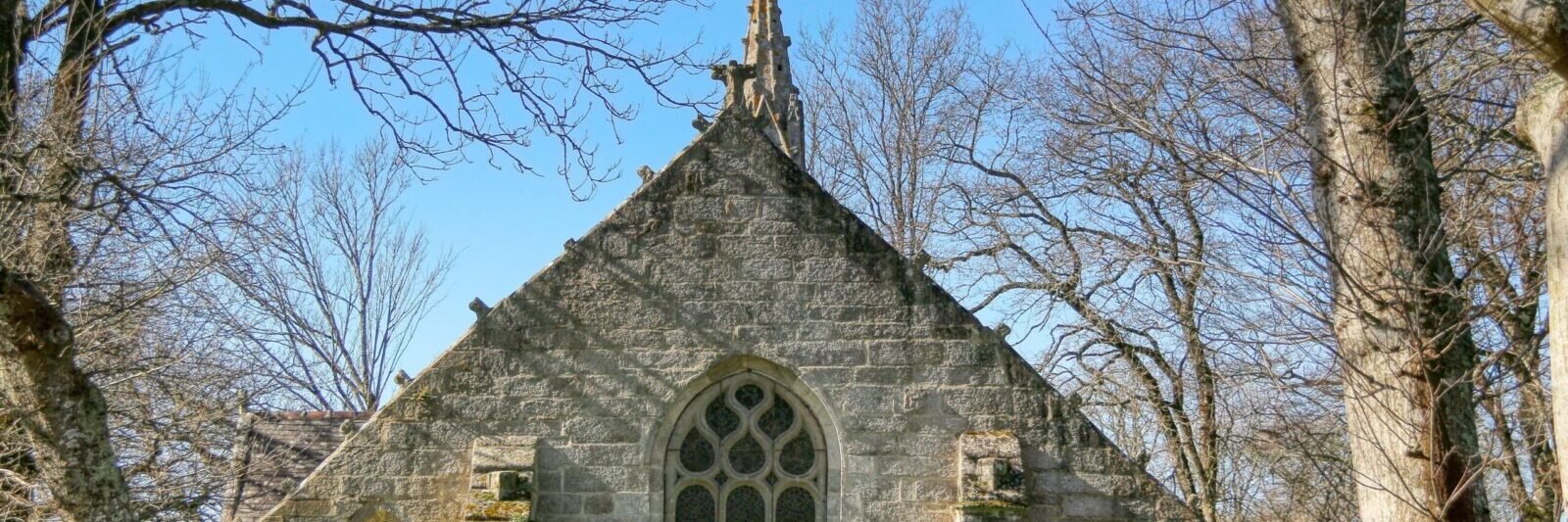
The Chapelle Notre-Dame de Trémalo stands on the heights of Pont-Aven, on the former parish territory of Nizon, near the hamlet of Trémalo. It was built in 1550, and the date inscribed above the south door confirms its origin. The construction was the result of a seigniorial foundation attributed to the du Plessis family, whose coat of arms can still be seen on various parts of the chapel and its furnishings.
Exterior architecture and surroundings
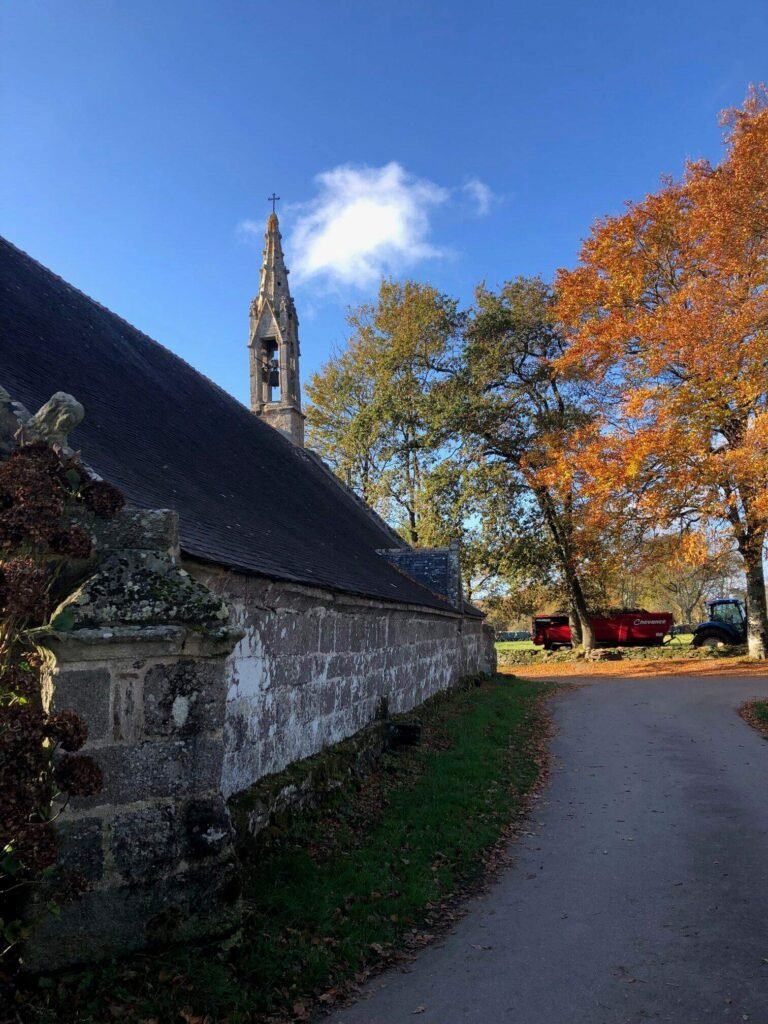
The chapel is rectangular in plan, with a flat apse and carefully dressed granite walls. Its architecture illustrates the flamboyant Gothic style, particularly in the chevet openings, some of which were later walled up. The west gable bears a small Cornish-style bell tower, while the steep roof slopes down very low on the north side, a feature that contributes to the building’s distinctive appearance.
The church is accessed via a path lined with oak and chestnut trees, in the heart of the verdant “Bois d’Amour”. This pathway between trees and light gives the visit a feeling of calm and contemplation, like a gentle transition before entering the chapel.

Interior, décor and furnishings
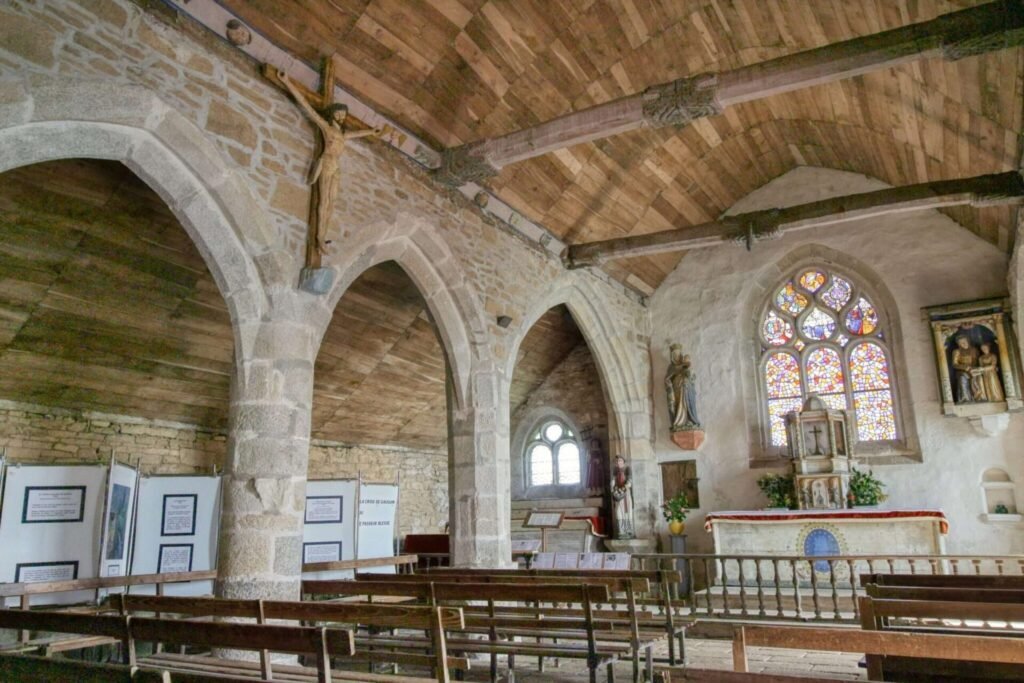
The interior consists of a nave flanked by aisles, divided into six bays supported by pointed arches resting on cylindrical pillars without capitals. The wood-panelled vault reveals meticulous workmanship, enhanced by sculpted beams and runners decorated with a variety of motifs. These include human heads, animals and grotesque figures, some alluding to the deadly sins, others bearing the founders’ coats of arms.
The furnishings include three wooden altars leaning against the chevet, separated from the rest of the nave by a communion rail. The statuary is abundant and bears witness to Breton popular piety. These include a 15th-century stone Virgin and Child, a sculpted group depicting Saint Anne teaching the Virgin (17th-century polychrome wood), and several polychrome wood statues of Saint Corentin, Saint Laurent, Saint Étienne, Saint Léger and Saint Madeleine.

The “yellow Christ” and the artistic heritage
The chapel contains a 17th-century polychrome crucifix that has become famous as the “Yellow Christ”. Paul Gauguin chose it for one of his major paintings in 1889, before depicting it again in a self-portrait the following year. This work did much to make the chapel known far beyond Pont-Aven.
But the artistic appeal of the chapel did not begin with Gauguin. From the 1860s onwards, painters from Germany, Great Britain, America, Switzerland, Finland and Ireland frequented the chapel, attracted by its simple, inspiring atmosphere. The subdued light on the wood and stone, the silence, the surrounding nature – everything combined to nourish their gaze. As a result, the chapel became a popular stopover for artists associated with the famous Pont-Aven School.
Safeguarding, restoration and present-day life
Listed as a historic monument since 1932, the chapel has benefited from several restoration campaigns over the course of its history. Major works were carried out in 1755 and 1957. At the beginning of the 21st century, further work was carried out to consolidate the masonry, vaults and staircase of the bell tower, thanks to the efforts of associations dedicated to its preservation.
Today, the chapel is still open to the public all year round, with free admission and donations towards its upkeep.

A chapel of memory, faith and beauty
The Trémalo chapel is like a refuge where time seems to stand still. The building blends architectural sobriety with symbolic richness; stone, wood and light respond to each other gently. Footsteps echo beneath the framework, and you can feel the presence of the faithful, artists and generations past.
A place of worship, art and silence, it tells the story of a humble and radiant Brittany. To stop here is to accept the invitation to contemplate. Here, nature keeps watch, memory lives on and inspiration still circulates, like an ancient breath that crosses the centuries.