Between two trips to the vegetable garden, when the earth is resting or the rain invites me to slow down, I sometimes return to another living material: wood. In my little studio, I let my hands run over pieces of oak. I don’t carve very often, but every time I do, it’s like rediscovering an old conversation, a language I never quite forget.
It was Bon-Papa (my grandfather Jacques) who passed on this taste for wood to me, in his beloved house in Normandy. When I was a child, I used to watch him working his tool handles and other objects with quiet patience, listening to the BBC on his old battery-operated radio. I was not yet allowed to touch the grail of the workshop, his sharpened machines and chisels. The scent of shavings, the sawdust littering the floor, the regularity of the gesture, the simplicity of the moment… all this has stayed with me, along with the secret hope of one day being able to immerse myself in it, in my old house in Brittany. The years have gone by and this memory resurfaces between sowing and mulching, like a desire to stop time. So I pick up my tools and carve, without trying to produce, just to listen to the material and make it speak in a symbolic form.
I particularly like oak. It’s a solid, deep-rooted wood, a bit like any Breton. It carries the memory of the wind, the rain and the animals that inhabit it and encourage it to extend its branches ad infinitum. When I work with it, I feel that it has already seen everything from the top. You only have to look at its veins, which trace the harsh winters of centuries past, to understand that it knows the passing of the seasons better than I do. My role is not to force it, but to let it say what it wants. My chisel often comes up against veins that are too steep, but they will underline the beautiful, soft, realistic relief of the mark of time.
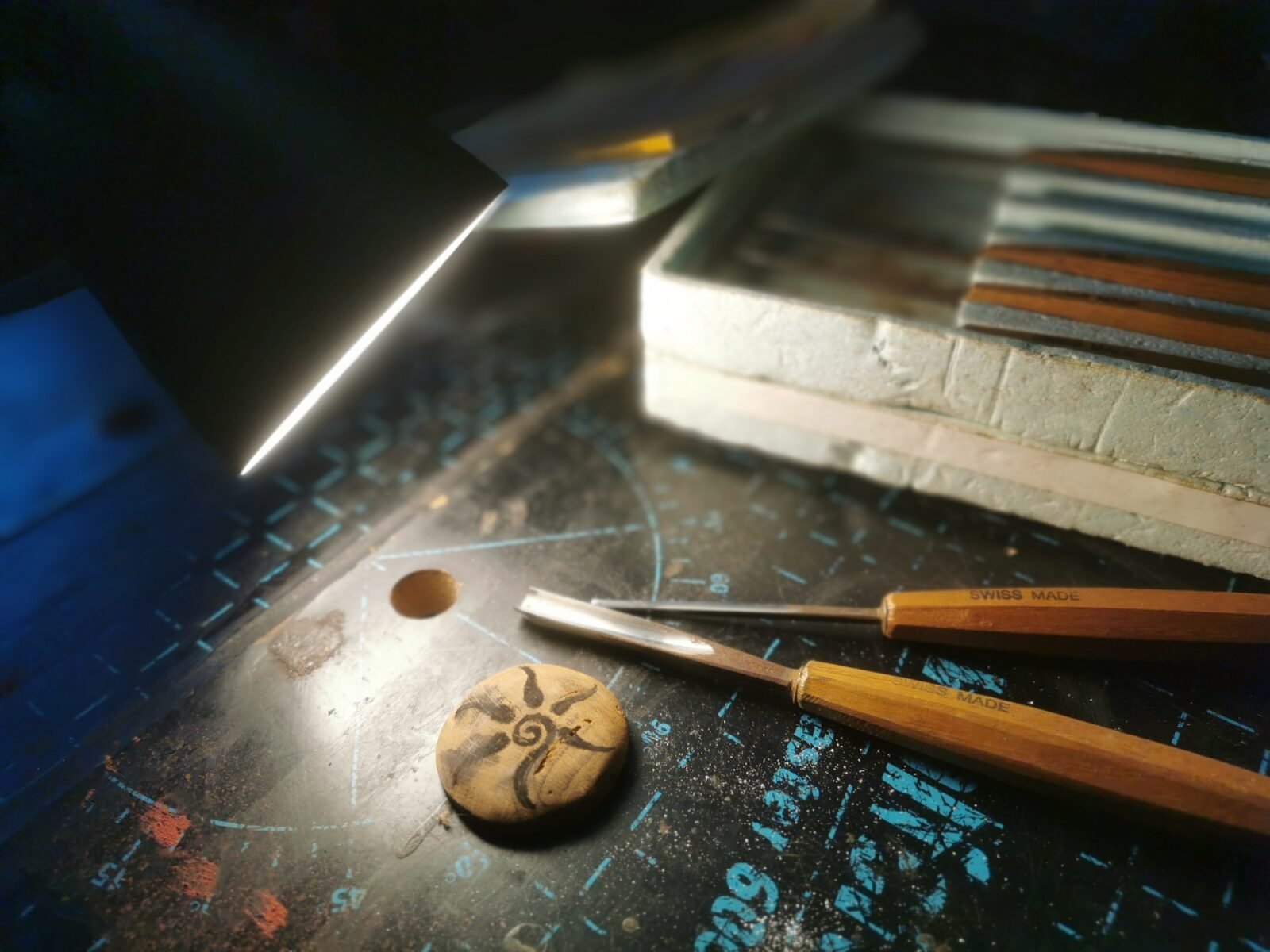
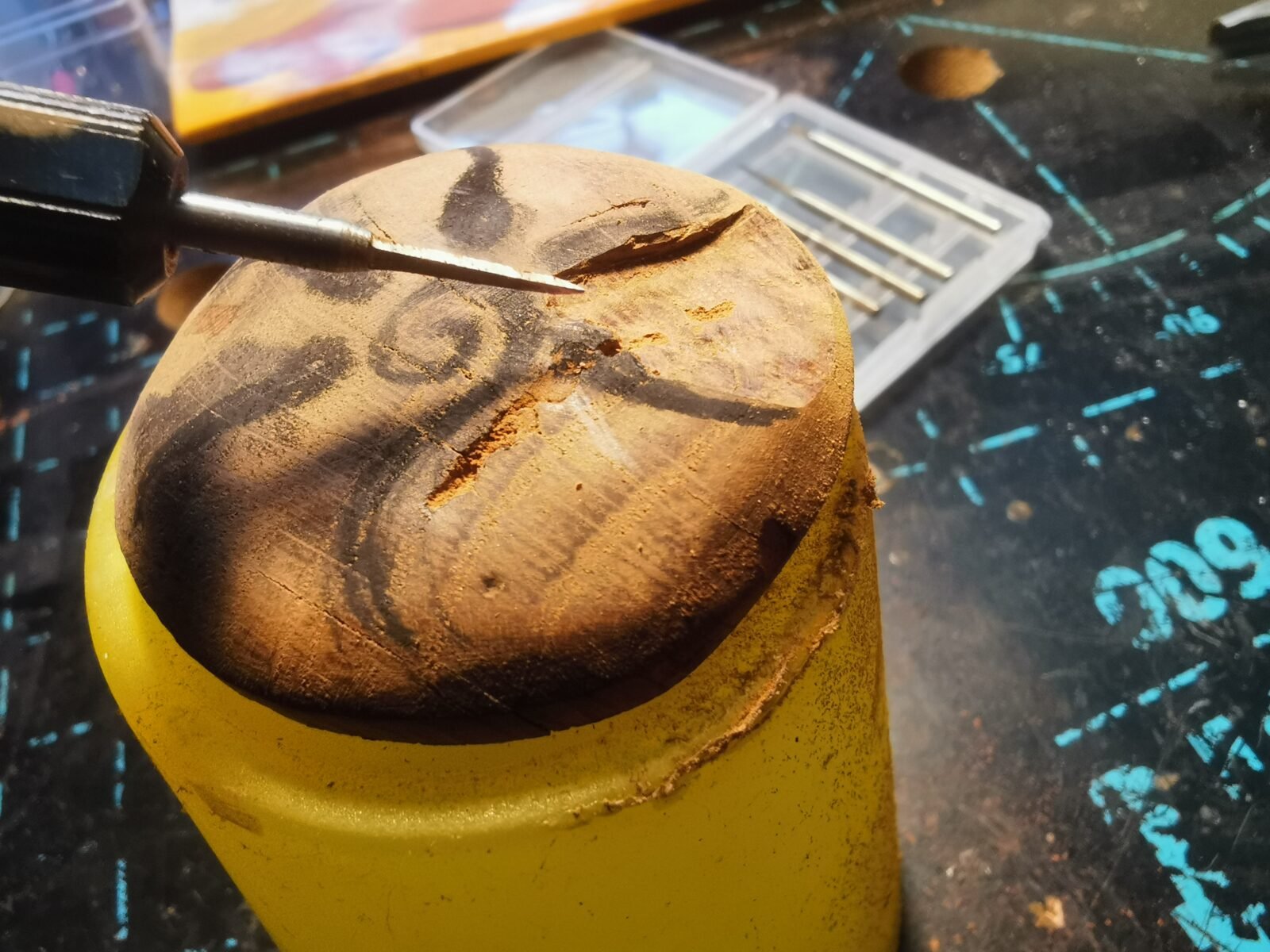
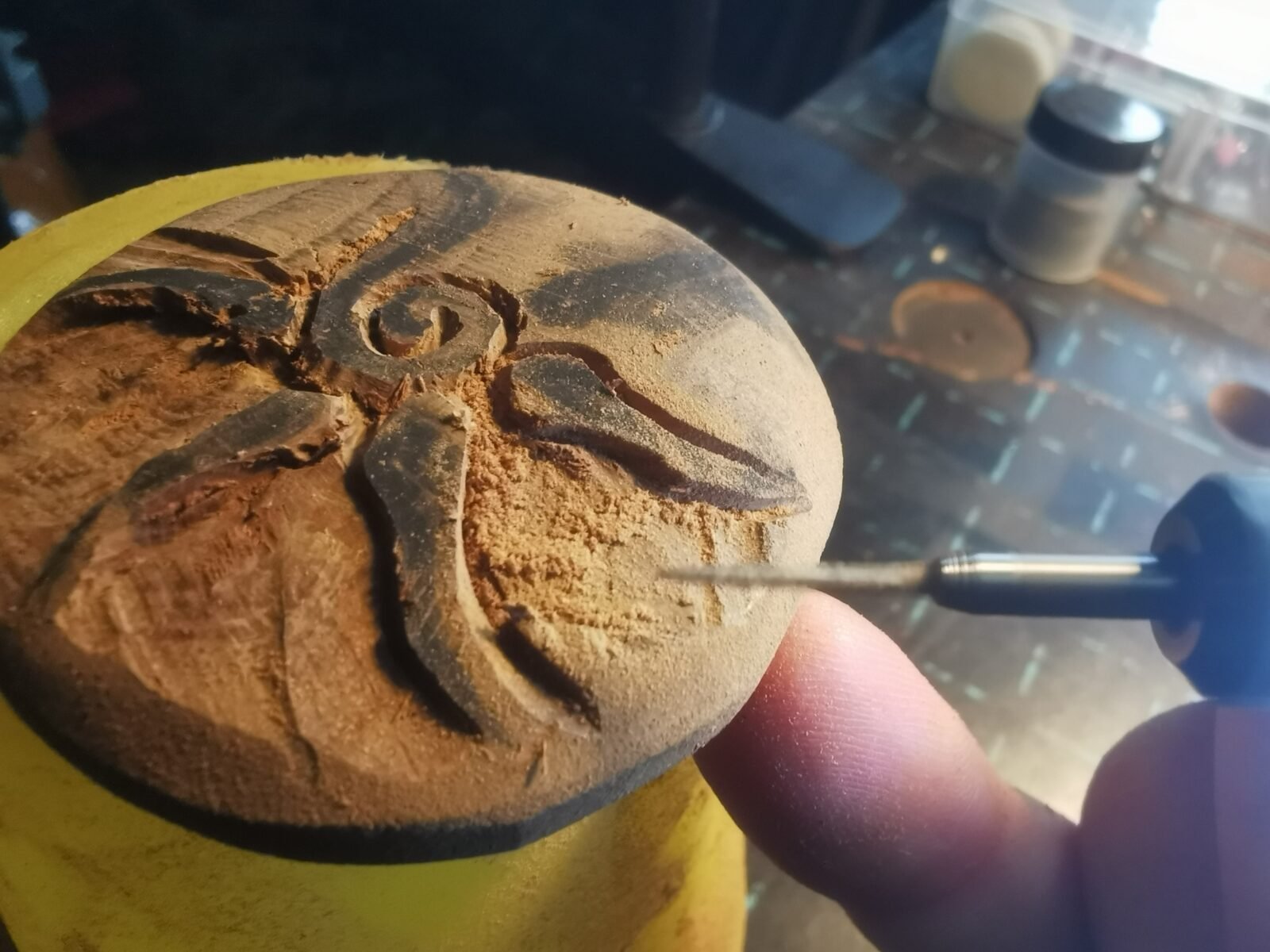
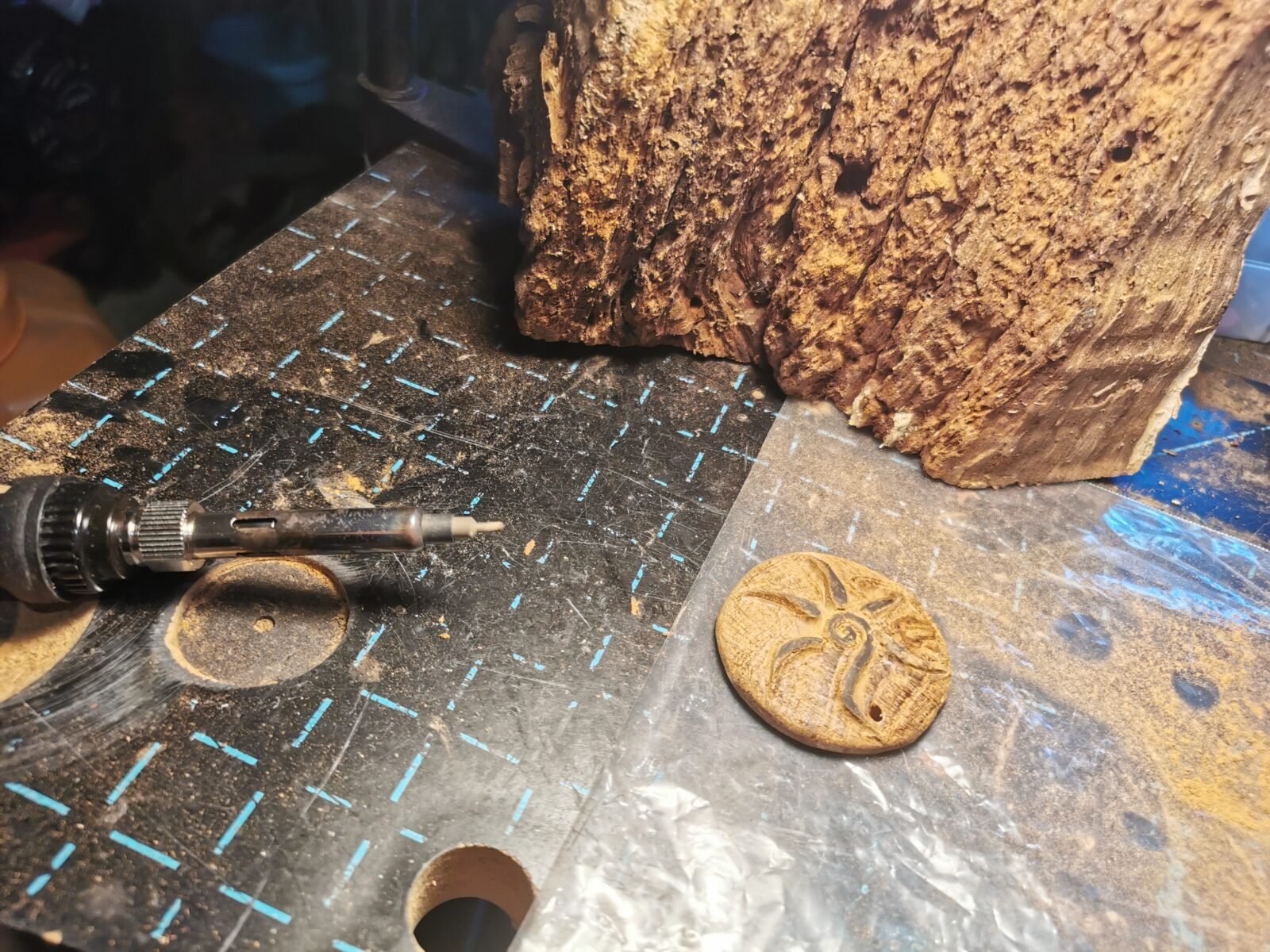
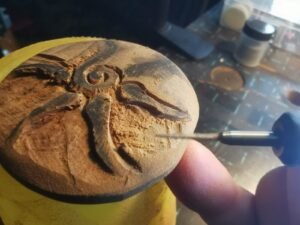
My tools are simple: a few gouges, a sharp blade, electric scissors and a pyrography iron for more perilous work. I’m not looking for perfection, just accuracy and authenticity. I like the handprint to remain visible, the wood to retain its texture, its breath. This first sculpture is modest, inspired by the garden and an event of the year, Beltaine.
Beltaine (or Beltane):
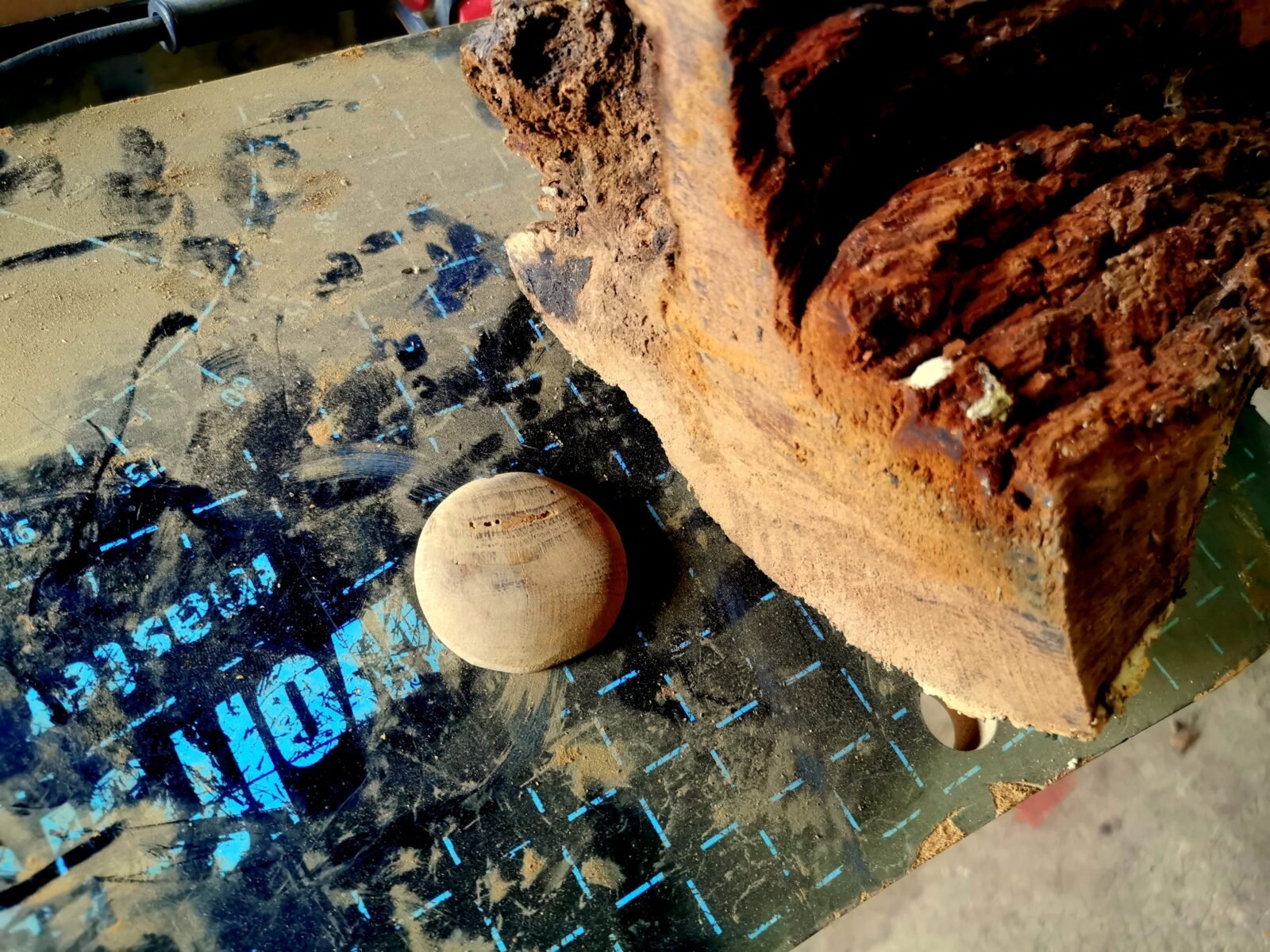
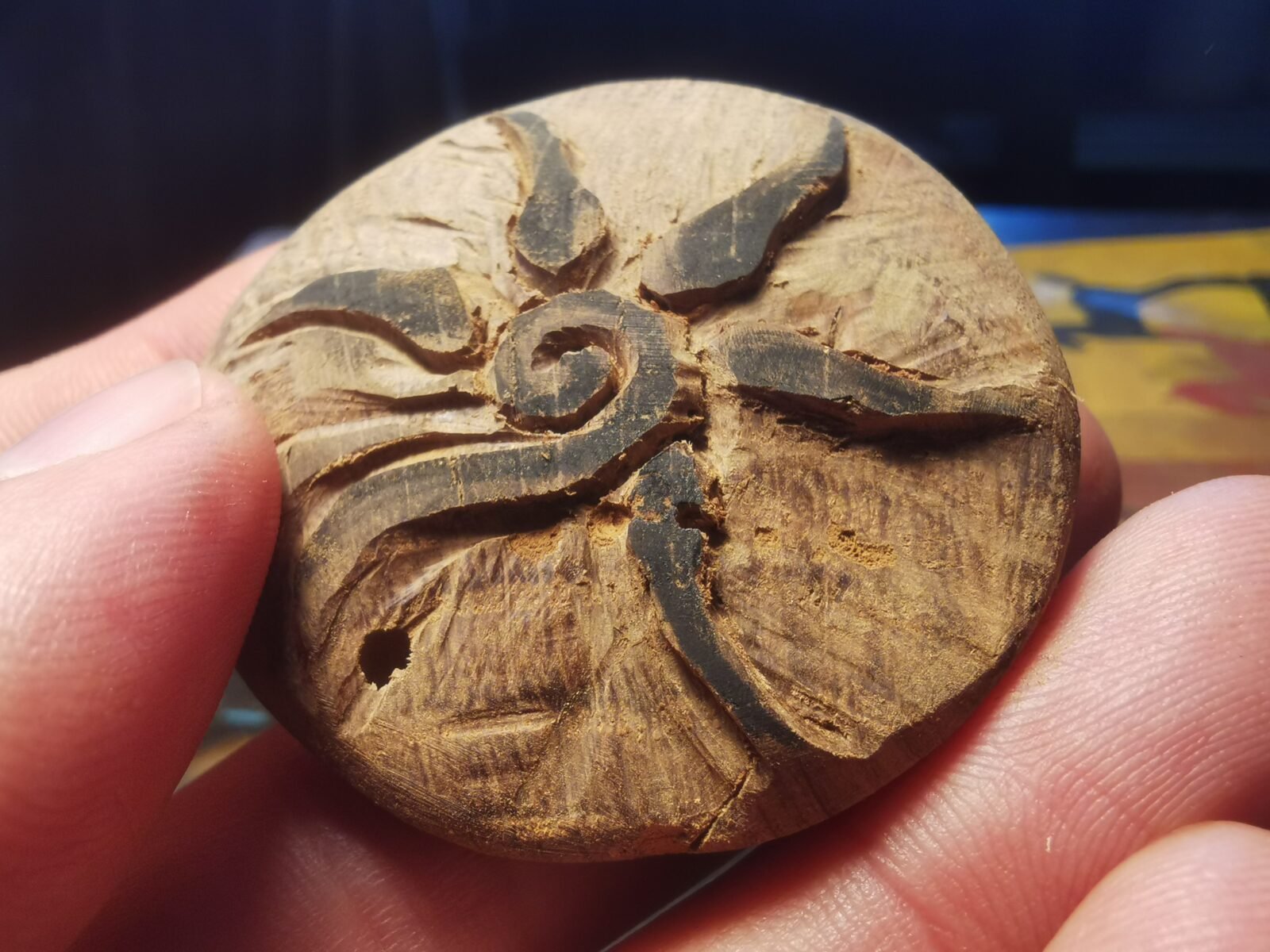
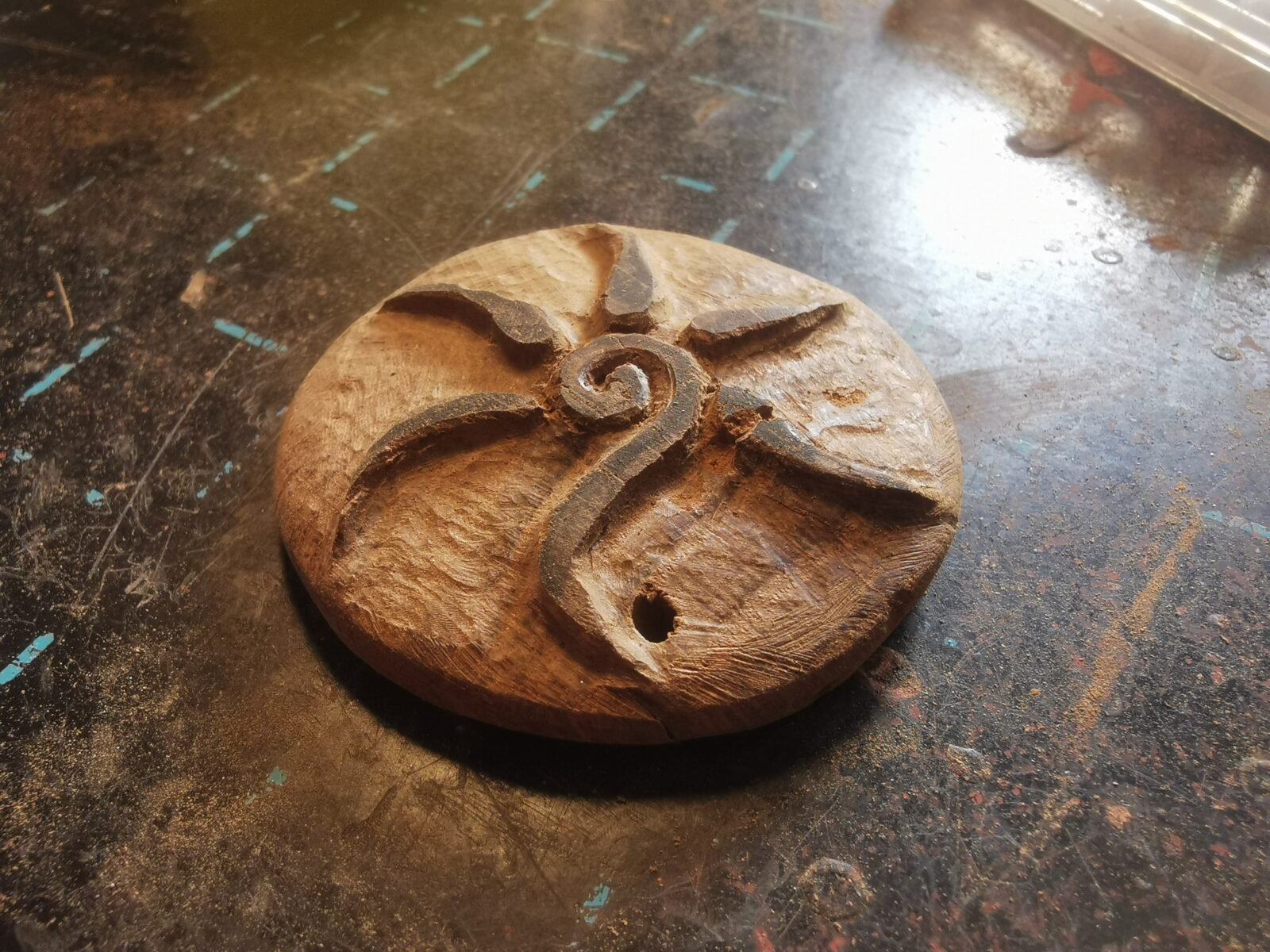
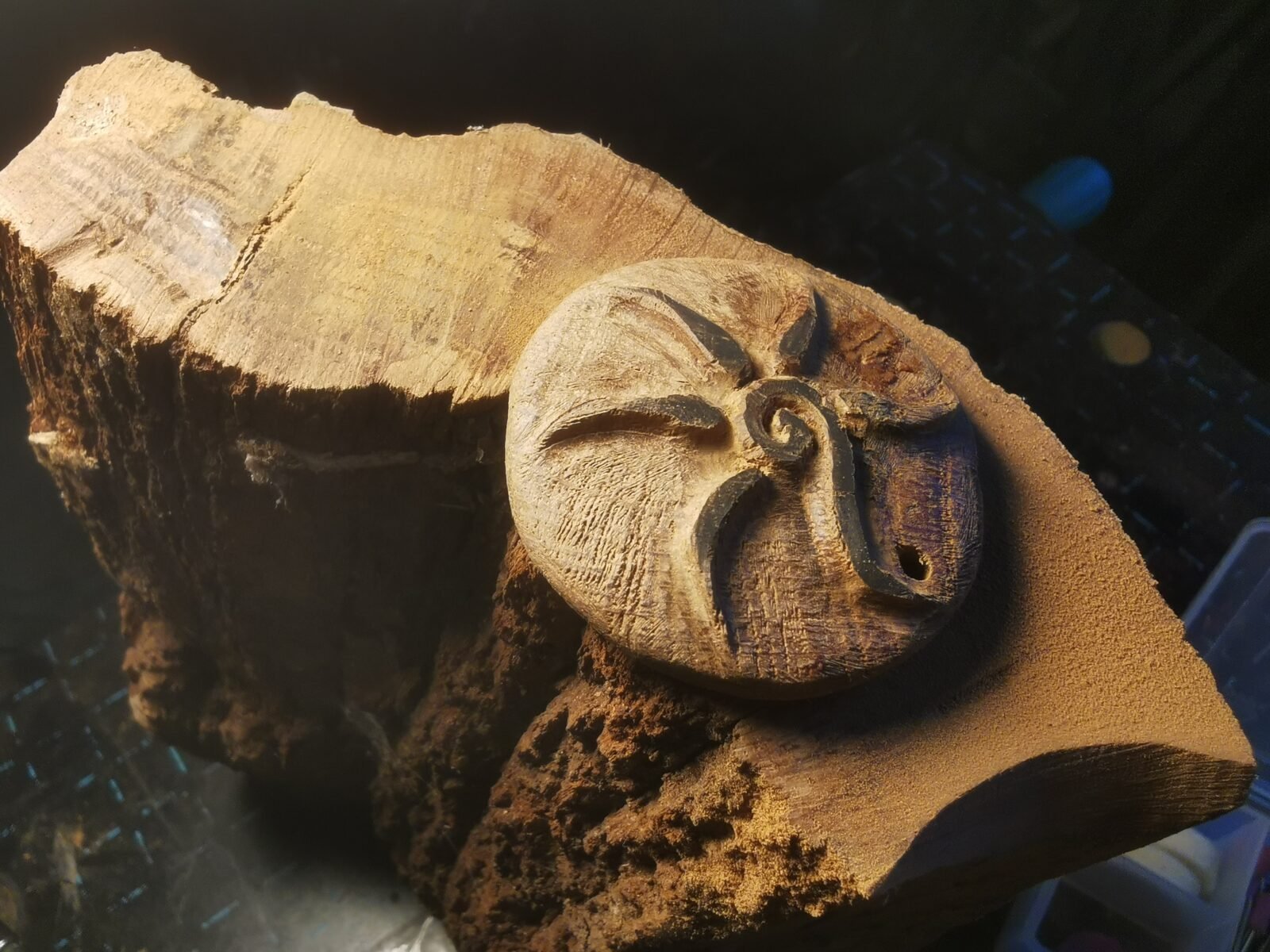
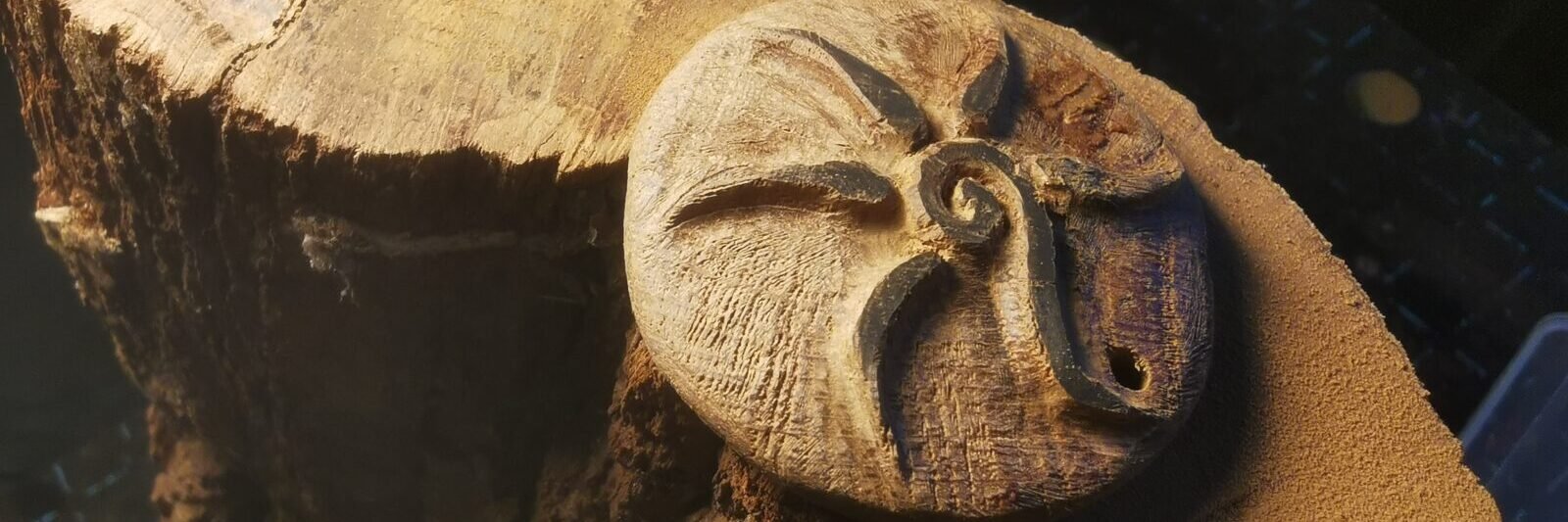
This year, I’m sculpting an oak talisman inspired by the festival of Beltane. It’s a Celtic festival rich in symbols of renewal and solar fire. I saw it as a way of uniting my two worlds: earth and wood, sap and light. The 5cm-diameter disc that I fashioned from a piece of tree trunk torn off by the violent winds of the autumn 2023 storm is adorned with the rays of a stylised sun, one of whose rays starts in a spiral at its centre. This magical object carries the symbolic story of the old and wise wood of which it is composed.
Sculpting reminds me that everything takes shape slowly: a plant, an idea, an emotion. Wood teaches me patience, just as the vegetable garden teaches me patience and resilience every day, and to start again every year. The two respond to each other: in one I sow, in the other I reveal. In both, I listen to life at work.
What I’m looking for is that suspended moment when the hand, the breath on the shavings and the material come together. The meditative silence into which I immerse myself then becomes almost palpable, broken only by the tiny creaks of the chisels on the wood. These are simple but essential moments, pauses in the tumult of our century. Breaths.
I believe that wood retains everything: the rain, the heat, the traces of the wind… and those of our hands. When I sculpt, I feel like I’m conversing with nature in a different way. It’s a way of saying thank you, gently, to this living world of which I am a part.
This Beltaine talisman represents an event in the life of one of our sons on 1 May this year. A new beginning, engraved in wood.